

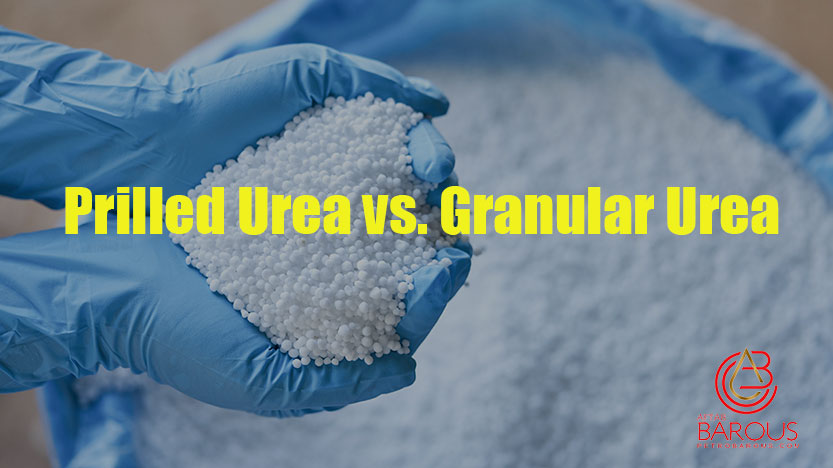
Prilled Urea vs. Granular Urea
Prilled urea is the product of the reaction of ammonia in an anhydrous manner with a pressure of 180 degrees. The granulated form of urea solves the prilled urea meaning. It is a substance produced by protein metabolism and, in contrast to granulated urea, dissolves in water in a short time.
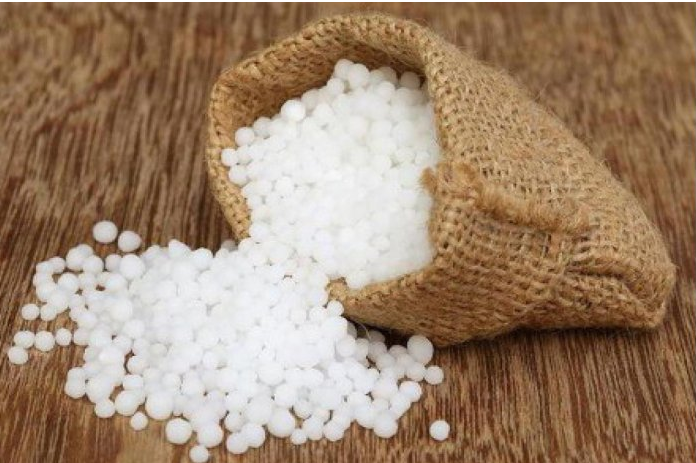
Fertilizer, known as urea fertilizer, takes its place in the market in two ways: urea, available in prill or granule form, can be used in all crops throughout the production period. Prilled urea, which attracts attention with its white color and odorless feature, dissolves easily in water. This easily applied nutrient, which facilitates crop growth and the agricultural process, falls into the nitrogen fertilizer category.
Using urea as a fertilizer is the most widespread usage for this chemical; however, technical prilled urea is an industrial material in the synthetic industry and other fields, like medicine, textile, dye, oil refining, printing, and detonator.

What is Prilled Urea? How does it work?
The best definition and the most proper prilled urea meaning can be as a nitrogen fertilizer type that has excellent usage in both foliar and soil fertilization. The formula of urea fertilizer is CO (NH2)2-46%N. The amide fertilizer is configured with carbon and nitrogen. Prilled urea usage is easy and well-known for its slow effect on crops. The reaction starts with the bacteria in the soil so the crops can take up the urea and absorb it. Ammonium nitrogen appears, and thus the crop gets its nutrients. How long the granule urea will take effect varies according to the efficiency of this reaction, soil temperature, and bacterial concentration in the soil.
Prilled urea usage at the right time and amount prevents the problems you may encounter in case of urea deficiency. In instances where urea is low, the development of crops slows down considerably, and wilting leaves and a decrease in yield may occur. According to academic documents, the highest nitrogen rate among fertilizers is in urea fertilizers. One hundred kilograms of fertilizer containing 46% nitrogen has approximately 46% kilograms of pure nitrogen. This high nitrogen content makes granulated urea and prilled urea used as the first choice for plants that need nitrogen. However, in the absence of other main substances in the fertilizer and other deficiencies in the soil analysis, farmers can refer to alternatives of different fertilizer types.
Is there any harm in using prilled or granule urea?
While there is no harm in correctly using any urea fertilizer, it is necessary to avoid unconscious and wrong service. It is essential to have accurate information on how to use granule urea or the urea prill uses because, during the underground application, it can cause damage when it coincides with the root or seed of the crop. Over usage of them may cause harm to the germination of the seeds and the development of the roots. Excess use increases the soil’s acidity, and the yield decreases contrary to expectations. Intense and unnecessary use can even cause burns in the belongings of the plant. In addition, high nitrogen might bring environmental pollution.
Another point that draws attention to granule urea or the urea prills uses is related to their storage of them. Any urea fertilizer should be stored far away from heat and light sources. You can stack them in clusters or place a maximum of 15 sacks on top of each other. Still, you should be careful that the contact of the sacks with the ground is interrupted by the grids. In addition, you should consider a space of at least 1 meter between them. The urea fertilizers must be kept in well-ventilated, dry, and safe warehouses. It is essential not to smoke in the warehouse and not to stock up on ammonium nitrate and other compound fertilizers.
What does prilled urea and granule urea do?
You can use granulated urea to meet the nitrogen needs of crops. The proper amount of nitrogen may:
- accelerates the development of the crop,
- brings vitality,
- supports photosynthesis,
- yields, and
- helps plants in all developmental stages.
In this context, we can say that granule urea and prilled urea provide a height-extending and root-enhancing effect in crops. Urea fertilizer of any kind, which supports crops’ fruit development and grain formation, is considered among the essential supports for grain agriculture and corn cultivation. Prilled urea is one of the most used fertilizers worldwide, thanks to its benefits. The advantages of urea fertilizer for widespread use are underlined.
The great advantages of granule or prilled urea use
Granule or urea prills use alone can provide significant support for nitrogen-deprived crops, as it contains a high amount of nitrogen. In addition, its agricultural value is seen as high in terms of the benefits it promises. In addition, while some fertilizers have a corrosive effect on agricultural vehicles, urea fertilizer reduces this effect considerably. For this reason, urea is considered more advantageous for the long-lasting use of cars. Prilled urea, which dissolves quickly in water and is easily applied, is farmers’ choice in this respect. In addition, using prilled urea is a much more economical option than other fertilizers because urea price per ton today is considerably lower than any other kind of fertilizer. Urea is a fertilizer, which is not flammable and thus provides safety, so it does not pose a risk in terms of storage. The neutral pH level also minimizes the possibility of damage to the crop.
Urea prilled uses are standard in rainy regions. It is preferably mixed with the soil before precipitation or applied to the ground by diluting; it is applied earlier than other fertilizers due to its unique content. Products react after a certain amount of time pass, which must be converted to ammonium nitrate to be used by the crop. When prilled urea is the top fertilizer during chemical transformation, nutrients can accumulate on the soil surface, and up to 30% of nitrogen will waste in gaseous form. For this reason, it is necessary to be careful against using urea in arid soils when the air temperature is high.
🌟 Request for Petro Barous Urea (WhatsApp)
Application time for granulated urea and prilled urea
We cannot discuss a particular season or period to use and apply the urea fertilizers. However, Prilled urea uses are mainly in spring; also, it can be used in summer by providing the right conditions. Nutrients can be given at all stages of crop development before, during, after, and in underground or above-ground applications. According to the fertilizer recommendations documents, you should have a soil analysis before using any urea fertilizers. According to the result, you can calculate how much granule urea you can use per acre. By multiplying the amount of pure substance by 2.2, we can reach the figure to be taken per acre. For example, according to the analysis, if your required nitrogen requirement is 5, you can find that you need 11 by multiplying 2.2 by 5.
For which plants can granulated or prilled urea be used? And when is the best time?
Through the prilled urea MSDS, the neutral pH value of granule urea allows it to be used in almost all plants and all soils. You can prefer a granule area if you are growing grains, farming fruits, or planting vegetable gardens. You can give it before shoveling, when shoveling, or after shoveling.
The best time to apply the prilled urea in cereals through the prilled urea MSDS is during the shoveling time, before precipitation during the plowing period.
In the case of fruit trees, the best time for application is before flowering and before the first autumn shoveling in the vineyards.
Vegetable farmers apply half of the granule urea about 15 days after planting and use the other half after the fruit-setting process. Half of the granule urea is for planting time, and half belongs to the pre-shoveling time.
Prilled urea fertilizer is recommended for plants with nitrogen deficiency. As you can use it in almost all crops, you can see the benefits of urea, especially in tobacco and corn. You can use granule urea for plants with slow growth and nitrogen deficiency. Fertilizer provides an advantage as they can be applied in all development periods. Therefore, it is in the warehouses of almost all farmers.
What are the urea prices?
You can compare the prices of fertilizers containing granule urea and prilled urea by referring to Petro Barous‘ website, which is your first address for agricultural fertilizer needs. Granulated and prilled urea price per ton today would seem the most economical trade after meeting the Petro Barous, which offers the advantage of paying in cash or installments immediately or at harvest; you can examine many different types of fertilizers, see the special prices of other brands, and easily make the most appropriate shopping. Come to the authorized Petro Barous sales points immediately and start adding fertility to your land with urea prills used alongside the thousands of happy farmers who are Petro Baros friends. Discover the most advantageous way of agricultural shopping now!
Petro Barous Company has hired international and regional sales agents in an effort to expand and diversify its market worldwide. As a result, it has begun working with Debox, a global development and marketing agency with extensive expertise in the field, to boost sales and grow its network of foreign reps and partners.